If a homeowner in Huntington Beach opens ChatGPT and types “best HVAC company near me,” the answer is a short list of businesses the model decided to trust. Your job is to be on that list. Geo optimization — the practice of being cited by AI search engines like ChatGPT, Perplexity, Google AI Overviews, Gemini, and Claude — is now as load-bearing as ranking on page one of Google. This guide walks through how those engines pick sources, what local service businesses need to change on their websites, and a 30-day sprint to start showing up.
Why Geo Optimization Now Matters More Than Page-One Rankings
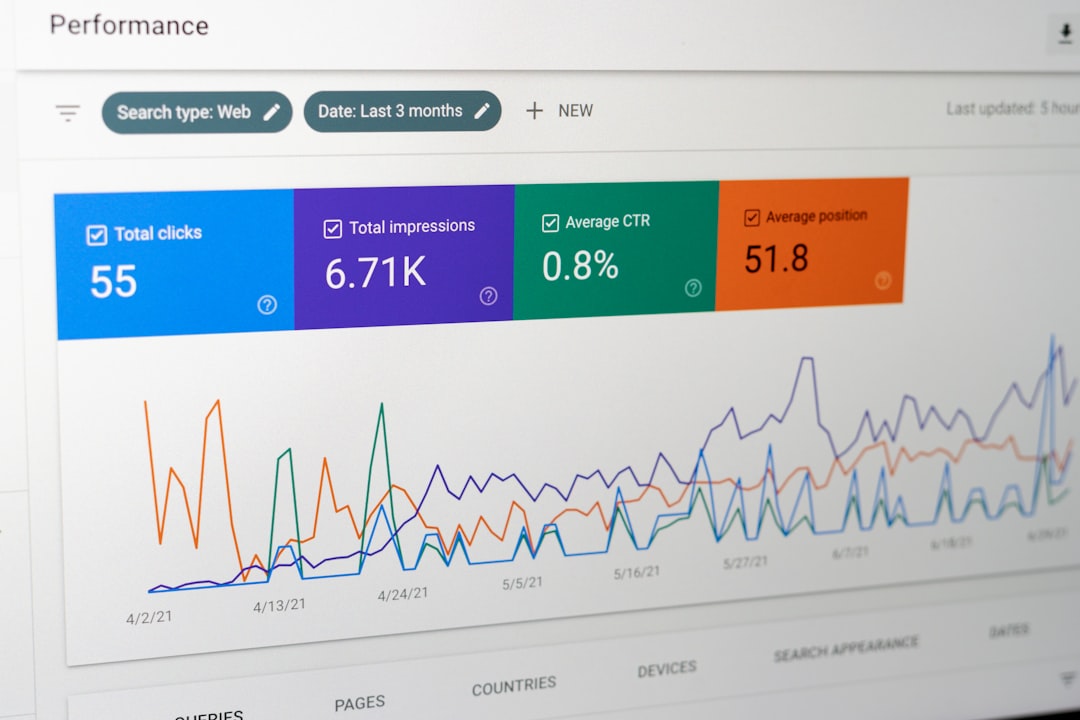
Roughly one in three high-intent local searches now happens inside a chat interface or behind a Google AI Overview. For a dentist, contractor, HVAC company, or restaurant in Orange County, that means a real share of buying decisions are made before a customer ever clicks a blue link. If your business is not named in the AI’s answer, you do not get a shot. Page-one rankings still matter, but they are no longer enough on their own. For a deeper primer on this shift, our what is GEO explainer covers the terminology.
How ChatGPT and Perplexity Decide Who to Cite
The two engines work differently and you need to optimize for both.
Perplexity crawls live, ranks sources by topical relevance and recency, then quotes the highest-confidence passages directly. Recency and clarity beat domain authority. A well-structured 800-word answer on a small site can out-cite a 4,000-word page on a big one.
ChatGPT with web search blends its trained knowledge, a retrieval index of authoritative sources, and live search. It leans heavily on sources that get mentioned by other trusted sources — Reddit threads, industry publications, .gov listings, well-reviewed Google Business Profiles. It is slower to cite new content but stickier once it does.
Both engines reward the same underlying things: a crawlable site, plain-language answers, schema, and external mentions in places they already trust.
The Foundation: A Site That AI Crawlers Can Read
You cannot be cited if AI bots cannot read your site. Three checks:
- robots.txt allows
GPTBot,PerplexityBot,Google-Extended,ClaudeBot, andOAI-SearchBot. Most small business sites silently block one or more without realizing it. - JavaScript-heavy pages render server-side or have static fallback content. Many AI crawlers do not execute JS the way Googlebot does.
- An
llms.txtfile sits at the root and points models to your most important pages with a one-line description each. Think of it as a sitemap written for language models. Our llms.txt file guide shows a working example.
This is the layer most agencies skip. Skip it and the rest of the work goes nowhere.

Write Content That Answers Questions in One Block
AI engines lift passages, not pages. The way to be quotable is to write self-contained answer blocks — usually 40 to 80 words — that resolve a single question without forcing the model to stitch context from elsewhere.
The format that wins:
- Question as an H2 or H3. Match the phrasing a real customer would use out loud.
- A direct one-paragraph answer. Lead with the conclusion. No throat-clearing.
- A short expansion underneath with specifics — pricing ranges, timelines, named neighborhoods, real numbers.
Service pages should each carry three to six of these blocks. So should every blog post. Then wrap them in FAQPage schema so the structure is machine-readable. Our breakdown of the AI answer box for OC dental clinics shows the exact pattern in production.
Build the Off-Site Signals AI Engines Actually Trust
Models lean on the same sources humans already trust, with a few quirks:
- Google Business Profile — heavily weighted, especially by Google AI Overviews. Reviews with descriptive text beat reviews that just say “great service.”
- Reddit — disproportionately influential for ChatGPT. A single mention in a relevant subreddit (
r/orangecounty,r/HVAC,r/Dentistry) can move you into the citation set. - Industry directories and .gov / .org listings — Chamber of Commerce, BBB, city business directories, licensing boards. These provide the “this business actually exists” confirmation models need.
- Earned mentions in local press or podcasts. One Voice of OC profile is worth more than ten directory submissions.
For practical citation building tactics aimed at the same outcome, the local SEO checklist for Huntington Beach businesses overlaps about 60% with the GEO foundation.
A 30-Day Geo Optimization Sprint for Local Service Businesses
If you do nothing else this quarter, run this sprint.
Week 1 — Foundation. Update robots.txt to allow AI crawlers. Publish an llms.txt. Add LocalBusiness and FAQPage schema to your homepage and top three service pages.
Week 2 — Quotable content. Rewrite three service pages with question-and-answer blocks. Publish one comparison post like “X service in [your city]: pricing, timeline, what to expect.”
Week 3 — Off-site. Refresh your Google Business Profile. Ask five recent customers for descriptive reviews — specifics, not adjectives. Submit to three industry-relevant directories.
Week 4 — Measurement. Run your top ten buying-intent prompts in ChatGPT, Perplexity, and Google AI Overviews. Log who is cited and why. This becomes your baseline.
If you are weighing whether to handle this in-house or hire help, our piece on what AI SEO agencies actually do is worth a read first — most of the market is repackaged SEO.
How to Measure Whether You’re Being Cited
There is no official “rank tracker” for AI engines, so you build the loop manually:
- Maintain a list of 10 to 20 prompts a real prospect would type. (“Best emergency plumber in Huntington Beach.” “Affordable dental implants near 92646.”)
- Run each one weekly across ChatGPT (web search on), Perplexity, Google AI Overviews, and Gemini.
- Log the cited sources, the snippet quoted, and whether your business was named.
- Track the citation rate over time — that is your real KPI.
If you would rather not run the loop yourself, our local SEO service covers GEO tracking and reporting as part of the monthly engagement.
Frequently Asked Questions
Q: What is geo optimization for a local service business? A: Geo optimization is the work you do so that AI search engines — ChatGPT, Perplexity, Google AI Overviews, Gemini, and Claude — name your business when a nearby customer asks for a recommendation. It is similar to local SEO but the audience is a language model reading your site instead of a search results page.
Q: How long until ChatGPT or Perplexity start citing my business? A: We typically see first citations between 30 and 90 days after a clean technical pass plus three to five Q&A-style pages. Perplexity surfaces new sources faster because it crawls live. ChatGPT relies more on its retrieval index, so it catches up later in the cycle.
Q: Do I have to choose between traditional SEO and geo optimization? A: No. The two share a foundation — a crawlable site, strong reviews, and clean local citations. Most of our Huntington Beach clients run them together.
Q: Can I do this without paying an agency? A: Yes, if you are willing to spend a few hours a week on it. The fastest DIY wins are llms.txt, FAQ schema, and one comparison post that answers the exact question prospects ask out loud.
Q: How do I tell if I’m actually being cited? A: Run your top three buying-intent prompts in each engine once a week and log the cited sources. Perplexity shows citations inline. ChatGPT shows them in the search panel when web search is on.
The Short Version
Geo optimization is local SEO with an AI audience. Open the door for AI crawlers, write answer blocks instead of essay paragraphs, and earn mentions in the sources models already trust. Do that for 90 days and you will start seeing your business named in the answers your customers are already reading.
Photos by Justin Morgan, Annie Spratt and Compagnons on Unsplash.